
10 Tips for Holiday Eating: How to Enjoy Christmas Without Nuking Your Fitness Goals


One feast won’t wreck your progress. A single Christmas dinner might spike your scale weight (thanks to water retention), but it’s not instant fat gain – real weight gain comes from consistently overeating.
Holiday bloat is temporary. Feeling “fluffy” after big meals? High-salt and carb treats make you retain water and feel bloated, but your body will de-puff in a couple of days with normal, healthy habits.
Plan, don’t ban. You don’t need to deprive yourself or eat only boring foods. Instead, go in with a game plan – practice a bit of “defensive eating” so you can indulge without guilt.
Smart strategies > strict diets. Simple tactics like not arriving ravenous, filling up on protein and veggies first, and pacing your alcohol can help you enjoy holiday meals while staying on track.
Stay accountable (and flexible). Keep up some exercise, get enough sleep, and use tools like the luna for daily motivation and tips. When you indulge, savor it guilt-free and then get back to your routine.

Staying Healthy During the Holidays (Without Being a Grinch)
For many fitness enthusiasts, the holidays can feel like a minefield of mashed potatoes and endless dessert trays. The struggle to stay healthy during the holidays is real – between office parties, family feasts, and Grandma’s famous cookies, it’s easy to worry that December’s delights will nuke your fitness goals. The truth, however, is that you can enjoy Christmas treats without throwing your progress out the window. In fact, the average holiday weight gain is only around 1–2 pounds, and that’s often from indulging a bit every day over the season. (Just 200 extra calories a day – say, a piece of pie or a couple of cookies – can add up to 2–3 pounds over five to six weeks!) The real issue is that many people don’t lose those small gains afterward, letting them add up year after year.
The good news: you don’t need to cancel Christmas or swear off holiday eating. By making a few smart choices, you can stay healthy during the holidays and still savor your favorite seasonal foods. It’s all about balance, moderation, and a little planning ahead. (Having a handy tool like the LunaFit App doesn’t hurt either – think of it as your pocket nutrition coach, helping you navigate the season’s temptations in real time!) Before diving into specific tips, let’s tackle some big questions and clear up common worries about holiday indulging.
Does One Big Holiday Meal Make You Gain Weight?
One of the most common fears is that a single lavish Christmas dinner will instantly translate into extra pounds of body fat. Relax – one big meal will NOT make you fat overnight. Weight gain (and loss) is a cumulative process that happens over time, not from one turkey dinner. If you wake up to a scale that’s 3, 4, even 5 pounds heavier the next day, it’s almost certainly not fat. So what’s going on?

Temporary water weight and bloat.
Holiday foods tend to be saltier and higher in carbs than your usual fare (think ham, stuffing, gravy, and all those desserts). When you eat lots of salty, carby dishes, your body holds on to water. Sodium makes you retain fluid, and carbohydrates stock up in your muscles and liver as glycogen – for every gram of glycogen, your body stores about 3 grams of water along with it. The result? You might be a few pounds heavier on the scale after a feast, purely from water and the weight of the food still in your system. In fact, a really indulgent, sodium-heavy meal could make you appear up to 5 pounds heavier the next morning. This holiday bloat is uncomfortable (hello, puffy fingers and a post-pie belly), but it’s temporary. As you return to your normal eating and hydration over the next day or two, your body will flush out the excess water and your weight will settle back down.
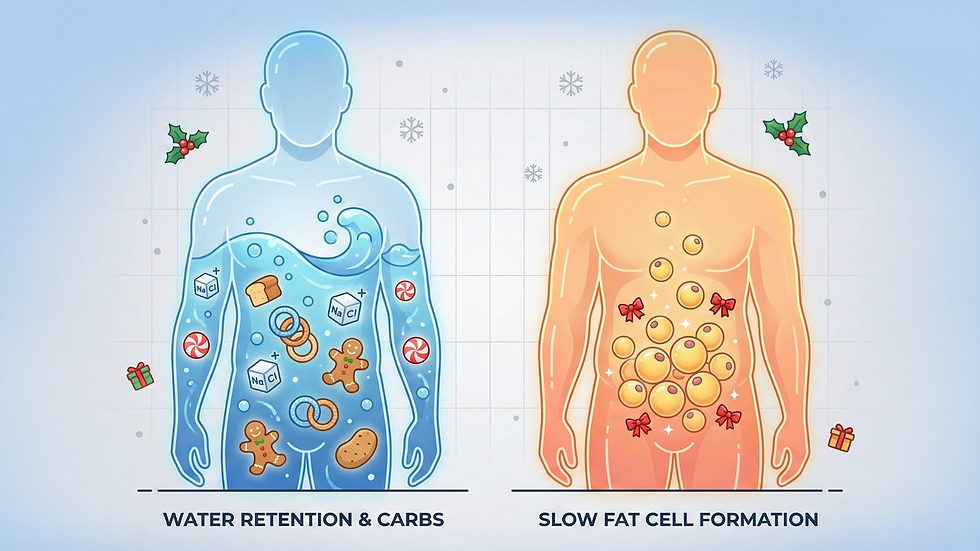
Real fat gain takes time.
To gain actual body fat, you need to consume more calories than you burn – and it takes about 3,500 extra calories to gain one pound of fat. That’s a huge surplus to achieve in one sitting. Even if you completely stuffed yourself, say eating 2,000 calories above your maintenance needs on Christmas, the worst-case scenario might be roughly half a pound of fat gain. (And that’s if you really went ham – pun intended – and all those calories turned to fat, which is unlikely.) Usually, some of the excess just gets burned off as heat or comes out the other end. In short, one meal, or even one day of festive eating, isn’t going to destroy your progress. True weight gain happens when that one day turns into a week or a month of overindulgence. So go ahead and enjoy Christmas dinner – just don’t make every day of the season a feast.
Mind the mindset
Instead of freaking out about one big meal, remind yourself that maintaining fitness is about consistency. As long as you get back to your healthy routine, your body will handle the occasional feast. (Pro tip: If you’re feeling anxious, avoid weighing yourself the morning after a huge meal. Give it a couple of days for your body to normalize. Or better yet, ask your LunaFit virtual coach for reassurance – it knows that spike is just water weight and will encourage you to stay calm and carry on.)

Healthy Holiday Eating Strategies to Stay on Track
If you’re wondering how to stay on track during Christmas gatherings or looking for healthy holiday eating strategies to avoid overeating at holidays, this section is for you. The key is having a game plan that lets you indulge intelligently. Below are ten practical tips to help you enjoy the holidays without derailing your fitness. (Spoiler: You can absolutely have that pie and eat it too – with a few smart moves!)
Don’t skip meals to “save up” calories.
Skipping breakfast or lunch on Christmas Day in anticipation of a big dinner might sound wise, but it backfires. Research shows that skipping meals often leads to overeating later. You’ll arrive at dinner ravenous and end up eating even more. Instead, have a protein-rich breakfast or mid-day snack (like Greek yogurt with fruit or a handful of nuts) to take the edge off your hunger. You’ll have better portion control when the feast begins.
Have a plan for holiday eating (and write it down).
A little planning goes a long way during the holidays. Decide ahead which indulgences are worth it and which you can pass up. For example, maybe you’ll enjoy Grandma’s lasagna guilt-free but skip the store-bought dinner rolls. Or plan to have one plate of favorites and wait 20 minutes before considering seconds. Studies actually show that people who go into the holiday season with specific eating and exercise strategies maintain or even lose weight, while those who “wing it” tend to gain a few pounds. So make a plan – even if it’s as simple as “one dessert a day” or scheduling a morning walk. (You can even let the LunaFit App’s AI coach help craft your holiday game plan! It can suggest goals and give you daily reminders to stick to them.)
Pre-game with protein and fiber.
Never show up starving at a holiday party or dinner. Have a small, healthy snack an hour or two beforehand – ideally something high in protein and fiber. A piece of fruit with a cheese stick, some veggie sticks with hummus, or a protein shake will work wonders. This takes the edge off your hunger, so you’re less likely to inhale three servings of turkey and gravy on arrival. Plus, protein and fiber help you feel full and stabilize blood sugar. Think of this as “damage control” that makes it easier to make mindful choices at the buffet.
Start with veggies (the secret weapon).
At the big meal, fill at least half your plate with vegetables or salad before anything else. This ensures you get plenty of fiber and nutrients and helps crowd out higher-calorie items. The fiber and water in veggies will start to fill you up. Next, add a good portion of lean protein (turkey, roast beef, fish, whatever’s on offer). By eating veggies and protein first, you’ll curb your hunger and stabilize your appetite hormones. When you move on to the richer stuff like casseroles or pie, you’ll naturally eat less of them. As one strategy, make it a rule: before you grab any Christmas cookies or bread rolls, you must finish your veggies and protein. It’s a simple trick that can seriously cut down on calories without leaving you feeling deprived
Pick your indulgences (and truly enjoy them).
You don’t need to sample everything on the table. Survey the spread and choose the holiday foods you absolutely love – the ones that are worth every calorie – and skip the ones you’re lukewarm about. Love mashed potatoes but can pass on stuffing? Fill up on the potatoes and leave the stuffing. Die-hard for pumpkin pie but indifferent to sugar cookies? Have a slice of pie and skip the cookies. By being picky and mindful with indulgences, you save calories for the foods that bring you the most joy. And when you do indulge, do it mindfully: eat slowly, savor every bite, and really experience the taste. You’ll feel satisfied with less, and you won’t be reaching for random snacks out of boredom. The LunaFit coach actually encourages this kind of mindful eating – it might even prompt you with a gentle reminder to slow down and taste your food!
Practice the 20-minute rule.
Before going for seconds, wait about 20 minutes after your first plate. It takes time for your brain to receive the “I’m full” signal from your stomach. Use that time to chat with family, help clear the table, or just chill. Often, you’ll realize you’re not actually hungry for round two – that first serving was plenty. If after 20 minutes you’re still craving a bit more, go ahead and have a small second helping of your favorites. You’ll likely serve yourself a reasonable portion instead of piling on a heaping mound in the heat of the moment. This pause is a simple hack to prevent mindless overeating.
Limit liquid calories (choose drinks wisely).
Holiday beverages can be sneaky calorie bombs. Eggnog, punch, cocktails, wine, holiday lattes – they add up fast and don’t fill you up at all. You don’t have to avoid alcohol or festive drinks entirely, but set some limits. For instance, have a glass of water or seltzer between alcoholic drinks. Or decide you’ll stick to one or two drinks for the night. You can also opt for lighter options: a wine spritzer instead of wine, a light beer instead of craft beer, or a smaller pour of eggnog just to get the taste. By reducing liquid calories, you free up more room for the foods you enjoy, and you’ll likely feel better the next day too (hello, less hangover and bloating). Pro tip: Drinking plenty of water throughout the day (and between drinks) will not only keep you hydrated but also help flush out excess sodium to combat bloating.
Keep moving (make it fun!).
It’s tempting to Netflix and nap away the holiday food coma, but staying active will make you feel a lot better. A post-meal walk with the family, a friendly game of touch football, or even dancing to some Christmas music can help digest that big dinner and burn a few extra calories. You don’t need to grind out a super intense workout on Christmas (unless you really want to). Just aim to sit less and move more. Not only does activity help use up some of those extra holiday calories, it also lifts your mood and reduces stress. If you’ve got an exercise routine, do your best to stick with it through the holidays – even modified, shorter sessions are great. (Hint: The LunaFit App’s AI trainer can quickly generate a 15-minute hotel-room workout or a fun bodyweight circuit if you ask it, so no excuses!)
Get enough sleep and manage stress.
Ever noticed how being exhausted or frazzled makes you crave junk? Holiday hustle and disrupted sleep can play havoc with your hunger hormones. When you’re short on sleep, levels of ghrelin (the hunger hormone) go up, and leptin (the satiety hormone) goes down – meaning you feel hungrier and less satisfied. Plus, stress can trigger emotional eating (hello, stress-snacking on gingerbread men when dealing with crazy relatives!). Prioritize sleep during the holidays: aim for 7–8 hours if you can, and try to maintain a consistent sleep schedule. Also find healthy ways to unwind – whether it’s a quick meditation, some stretches, or escaping into a good book. A well-rested, calm you will naturally have better control around food and will enjoy the celebrations more.
Ditch the guilt and enjoy guilt-free.
Perhaps the most important strategy: allow yourself to enjoy holiday meals without guilt. Seriously. One large meal or a few treats here and there will not make or break your fitness journey. What matters is the overall pattern you maintain most of the time, not the occasional indulgence. So if you eat a bit more than planned or polish off an extra cookie (or five), don’t beat yourself up! Let go of the “all or nothing” mindset. Instead of saying “I blew my diet, might as well keep binging,” just acknowledge that you enjoyed something delicious and move on. Get back to your normal healthy eating at the next meal. Drink some water, go for a walk, and pat yourself on the back for making it through another year of memories with family and friends. Remember: the holidays are about joy and togetherness – food is a part of that, and it’s okay to partake. With the right habits in place, you’ll cruise into the New Year just fine. (And if you need a little extra encouragement, the LunaFit virtual coach is there 24/7 to remind you how far you’ve come and that one holiday doesn’t define your journey.)
Bottom line: Enjoy the heck out of your Christmas dinner and holiday treats! By using these strategies, you can indulge in festive foods and stay on track with your health. Balance and moderation beat restriction every time. And if you do overdo it a bit, remember that your body is resilient – just get back to your routine and you’ll be back to feeling like yourself in no time.

FAQ: Holiday Eating and Weight Gain
How do I eat healthy on Christmas?
Eat healthy on Christmas by practicing portion control and balance. Fill your plate with plenty of protein and vegetables first, then take small portions of your favorite rich foods. Don’t starve yourself beforehand – have a light, healthy snack so you’re not overly hungry. This way you can enjoy holiday dishes in moderation, stay hydrated (drink water between those glasses of wine), and savor treats without overdoing it.
Why did I gain 5 pounds overnight?
You didn’t actually gain 5 pounds of fat overnight – it’s mostly water weight and food volume. Eating a big, salty, high-carb meal (like a holiday feast) can make your body retain water and leave a lot of undigested food in your system, temporarily boosting the scale numberweekand.comdrgirouardmd.com. Once you return to normal eating and hydrate properly, that weight will drop back down in a day or two. In short, the overnight “gain” is bloating, not true fat gain.
Will one day of overeating ruin my progress?
No, one day of overeating won’t ruin your progress. Fitness and weight management are all about long-term habits. If you overindulged on a holiday, just get back on track the next day with your usual healthy meals and exercise. One high-calorie day might cause a temporary blip on the scale (mostly water weight), but it’s your consistent routine over weeks and months that matters most – not a single day.
How can I avoid overeating at holiday parties?
Avoid overeating at parties by planning ahead and using a few smart tactics. Have a protein-rich snack before you go so you’re not too hungry. At the party, start with veggies or salad to fill up fiber first, and be choosy with the buffet – pick the foods you really love and skip the rest. Also, eat slowly, take breaks to socialize away from the food table, and consider sticking to one plate. If you want more, give yourself a 20-minute pause before refilling. And don’t hover by the snacks – out of sight, out of mind!
What’s the best way to recover after a big holiday meal?
The best way to recover is to return to your normal healthy routine. Drink plenty of water to rehydrate and flush out excess sodium. Eat balanced meals with lean protein, vegetables, and fiber to get your digestion back on track. Light exercise – like a walk or gentle workout – can help you feel better and aid digestion. Most importantly, get a good night’s sleep to let your body reset, and don’t punish yourself. No extreme diets or guilt needed – your body will naturally rebalance if you just get back to your usual habits.
Empower Your Holidays: Remember, enjoying Christmas and staying fit aren’t mutually exclusive. With a bit of mindfulness and moderation, you can have the best of both worlds. And if you need a friendly nudge or personalized guidance, the LunaFit App has you covered with an AI virtual coach ready to help you thrive through the holidays. Don’t wait for New Year’s resolutions – start now by giving yourself the gift of a balanced, guilt-free holiday season. Here’s to celebrating without undoing all your hard work! Cheers and happy holidays!


Comments